

What is DBT, or Dialectical Behaviour Therapy exactly? Well, DBT is a type of behavioural therapy that has proved effective for a variety of mental health conditions. DBT can help you if you have Borderline Personality or Emotional Unstable Personality Disorder (BPD and EUPD), emotion regulation issues and ADHD.
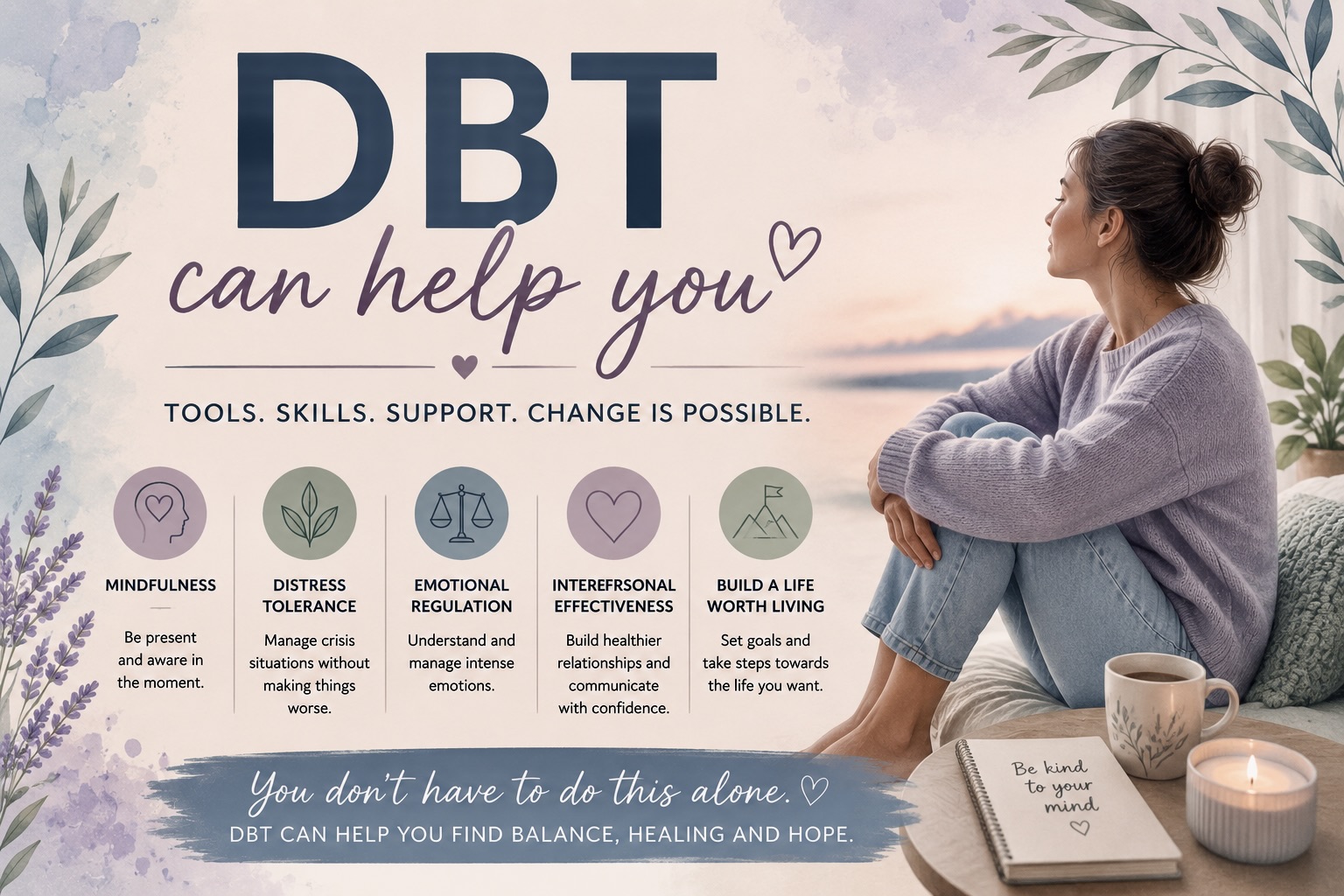
As a skills-based therapy DBT can help you learn how to regulate your emotions, manage any unhelpful behaviours, and improve your relationships. It was developed by Marsha Linehan in the 1980s. She is a clinical psychologist and still works with women who have BPD. When she first started out she found that traditional therapies really didn’t help much. Basically, this is because BPD is a complex issue that involves extremely intense emotions, impulsive behaviour, and unstable relationships.
Dialectical Behaviour Therapy is based on the idea that change is absolutely possible, even with BPD. It teaches you how to accept yourself, even your flaws, and how to make changes in your life that will improve its quality.
Individual and group DBT therapy
DBT is a comprehensive therapy and can include individual therapy, group therapy, and online coaching. Individual therapy is really the core. In individual therapy, your therapist will help you understand your emotions, develop coping skills, and make changes in your life. Group therapy can also be an important part. In group therapy, DBT can help you learn skills from each other and from your group leader. Phone coaching is often available for those who need additional support between group sessions.
It can be challenging as a therapy, but if you stick with it, DBT can help you. If you are struggling with BPD, regulating your emotions, ADHD or any other behavioural issues, it may be the right option for you.
Here are some of the ways DBT can help you
- to manage your emotions more effectively.
- to develop healthy coping skills.
- to improve your relationships.
- to reduce self-destructive behaviours.
- to improve your quality of life.
If you are interested in learning more ways DBT can help you, there are lots of resources available online and in your community. You can also talk to me and we can see if DBT would be right for you.

You must be logged in to post a comment.